Peptide Purity Evaluation Solution
Confirmed > 99% Lab-grade Peptides
The dissolved peptide sample is infused into a stream of fluid solvent (the mobile phase) that flows via a tube loaded with little particles (the fixed phase). Various molecules "stick" to those bits with various strengths, so they take a trip with the column at various rates. Refined distinctions in basic material purity and framework can result in variances in the activity of the final product." Mass spectrometry responses "is the found substance constant with the intended peptide identity? " With each other they give more powerful batch-level proof than either method alone. In the usual peptide COA context, peak pureness normally describes the percentage of overall chromatogram area stood for by the primary peptide height.
- When a combining fails, the expanding chain is topped to stop more prolongation of the wrong sequence.
- A peak with the right retention time could in theory be a relevant peptide with similar hydrophobicity.
- If you have any type of inquiries or certain demands, please feel free to contact us.
- Various other techniques like electrophoresis, capillary electrophoresis (CE), and nuclear magnetic vibration (NMR) can also be made use of to analyze peptide structure, fee, and purity, making sure comprehensive characterization.
Peptide Top Quality Screening System From Boc Sciences
These are useful in the right setup, however they need to be interpreted as method-specific proof rather than an universal replacement for HPLC and MS. However peptide pureness is probably the single essential top quality metric for any kind of research study peptide. It straight impacts the reliability and reproducibility of speculative results. A peptide listed at 75% pureness and one at 99% pureness aren't just various qualities-- they can produce meaningfully different end results in the very same assay.Composition & Content
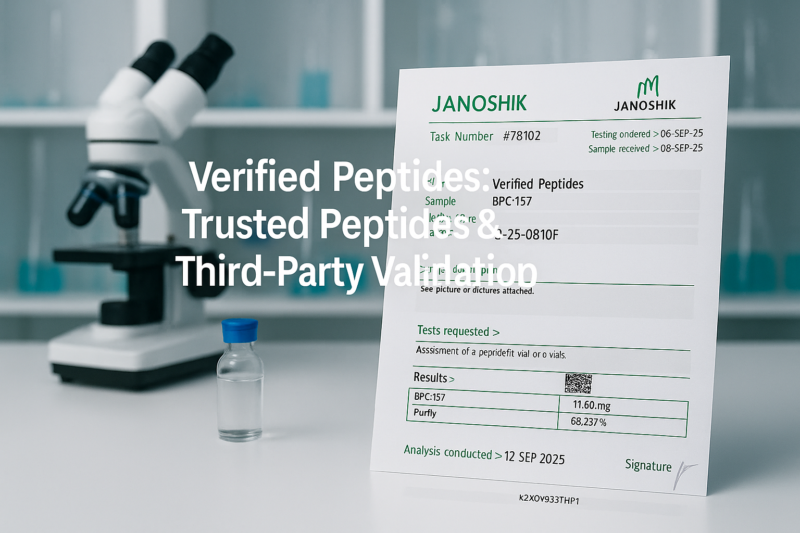
The software program draws borders around each optimal and calculates the area below. The pureness portion comes from comparing the area of the major peak to the overall location of all discovered heights. Many records include a table listing each height's retention time, location, and percent of overall location.
Quality Control For Researchers: Why It Starts With Recognition
By demanding peptides that feature confirmation of pureness and identification, scientists can significantly minimize the danger of speculative artifacts. Alternatively, using peptides that have actually passed third-party laboratory recognition assists ensure that the observed speculative impacts are absolutely as a result of the desired peptide and not because of impurities or errors. When you see peptides promoted as "research-grade," it refers to their intended use and the level of manufacturing oversight. Research-grade peptides are created research laboratory research study usage just-- they are not created under pharmaceutical GMP criteria and are not indicated for use as therapies or AminoAcidSupplements peptide chemical monographs in humans. These peptides include a basic quality control plan, typically including HPLC purity analysis and MS verification of identification, guaranteeing they fulfill scientific standards for purity and make-up.Throughout solid-phase synthesis, each amino acid combining step has a return of roughly 99-- 99.8%. When a combining falls short, the growing chain is covered to prevent additional elongation of the incorrect series. The outcome is a peptide that's much shorter than meant-- missing out on one or more amino acids.
BOC Sciences, with its robust logical system and professional group, concentrates on high quality testing services for peptide basic materials, peptide microspheres, peptide nanoparticles, and peptide formula preparations. We collaborate with biotech, pharmaceutical, CRO, CDMO, and scholastic groups on peptide chemical and physical evaluations that support research study and non-clinical decision production. Contact us today to discuss your peptide series, example standing, and analytical goals. Selecting the right external lab for peptide screening entails examining several variables. A relied on lab ought to have verifiable experience in peptide chemistry evaluation-- as an example, PhD-level chemists or biochemists on personnel who understand peptides' synthesis and degradation paths. Certification by pertinent bodies (such as ISO/IEC or certification for GLP/GMP conformity) is a strong indicator of high quality.